Showing posts with label The Nick. Show all posts

12.13.2010

Repo Men!

There are so many ideas coursing through this sci-fi/action/black comedy/thriller it's hard to know when it succeeds and when it stumbles. The story follows two dystopian repo men, who collect artificial body parts from people who aren't up to date on their payments. That is to say, they track down the carrier and surgically remove the mechanical organ (anything from proshetic limbs to imitation hearts), leaving the poor sucker bleeding on the ground. And all with a grin on their faces. There is good chemistry between the two leads, Jude Law and Forest Whitaker, and together they bring a crunchy dark humour to a very grisly profession. The comedic slant is mostly present during the first half of the film, and it saves the picture from being to staunch and depressing out of the gates. The inspiration for its Fahrenheit 451-esque twist on the repo man profession, is clearly the current state of American health care and pharmaceuticals. In the beginning of the film, the repossessed body parts seem to be necessary synthetic replacements – the victims are simply too afford poor them. They require the artificial aids to live or at least live comfortably. As the story goes on, it becomes apparent that 'The Union' (the creepy corporation which has a monopoly on the mechanical organ business), pushes and sells its products similar to the way pharmaceutical companies push drugs today. Due to a leap in technology, The Union can easily create an improved, no, a perfect version of every body part except the brain. As a result, people are spiralling into debt to become bigger (well, probably smaller), faster and stronger than they would naturally. What is a very simple idea becomes a sweeping indictment on not just health care, but many scary modern trends including reckless spending, aesthetic-obsessed celebrity culture, corporate monopolies, the empowerment of advertisers and general apathy. Whew. And how does the film mine all these ideas? With a minority-report riffing extended chase sequence, where Jude Law becomes hunted by his former employer for an artificial heart he can't afford. In other words, it does very little with a very fascinating dystopian world. At the same time, I'm only disappointed in retrospect. The action-oriented second half is polished, thrilling and engaging in it's own way. Even the ending, which despite employing a cheap narrative trick for a 'it was all a dream' style conclusion, actually works.

Repo Men is similar to sci-fi actioners like Robocop or Starship Troopers, films that have political motivations but would rather blow stuff up than pontificate on social ills. It probably has the most in common with District 9 which is similarly afflicted with bi-polar disorder, beginning with soaring rhetoric and ending like a transformers film. It's surprising then that while Disctrict 9 received across-the board beaming reviews (a 91% on Rotten Tomatoes), Repo Men is universally scorned (21%!). Based on those figures I feel like this will sound like heresy, but I think Repo Men is the marginally better film. The ideas it unpacks are conveyed with more brutality and precision than in District 9 (which is, contrary to popular belief, not about Apartheid but on modern South Africa (re: Sporgey's review)) and it has more fun doing so. There are no fuzzy pixar moments between CGI creatures either. But I digress. Both are great examples of a sci-fi renaissance of the last few years (others being Moon, 2012, Star Trek and Cloverfield) and would make a terrific double bill.

For a film that has more swagger and points of interest in it's soon-to-be repossessed pinky finger than say Avatar, yet the critics have relegated Repo Men to the bargain bin - which is a shame. Even if you hate it, it can fill a conversation or two. My vote for Hollywood underdog film of the year.

8.27.2010

CAGE MATCH

Here's my 5000 word Cage Match. Will be wittled down to more manageable size for the year-end Buff mag, but here is the unabridged version for those who want to enter the CAGE!

CAGE MATCH

Nicolas Cage is an enigma. He is Jekyll and Hyde. Born out of Hollywood royalty (his birth surname is Coppola) only to recently descend into a critical black hole that on the surface seems to shame any connection, however untenable, to Apocalypse Now. My thesis is that both Nicolas Cage, the A-list, oscar winning actor, and Nic Cage, the current king of trashy B-movies, can be celebrated equally, and are in fact more impressive when they stand side-by-side.

Cage began his career as a goofy hunk with roles in films such as Valley Girl (1983), Peggy Sue Got Married (1986) and Vampire's Kiss (1988). These titles are little more than 80's fluff comedies, and Cage shows spark, but in the end can do little more than squint and flex his muscles, due to the overall quality of the film making. With a few killer scripts and memorable performances, however, Cage ensured his career had staying power. With Moonstruck (1987), Raising Arizona (1987), Wild at Heart (1990) and Leaving Las Vegas (1995), and more recently with Adaptation (2002) and Bad Lieutenant: Port of Call New Orleans (2009) he combined his goof-hunk with a more energized, manic presence on screen. In these 5 titles he is a tour-de-force, brilliant and off-beat, a raving hound-dog. This is Nicholas Cage. Strangely he is a relative anomaly in his own filmography.

Starting with The Rock in 1996, he transformed himself into a leading action star and a huge box-office draw. He has made over 20 over-the-top B-Action movies over the last 15 years. This Is Nic Cage. With steadily receding from the brow yet ever-growing towards the shoulders hair and scrawny jowls he now blasts through scripts whose plots are so far-fetched as if to make up for his relatively stoic poor-man's Bruce Willis. In titles such as Knowing (2009), Bangkok Dangerous (2008), Next (2007), Ghost Rider (2007) and others, he is often saving the world and a damsel in distress, and appearing to be the least likely to do it. He doesn't nail one-liners like his action-star peers do, but tentatively mumbles them to himself while looking up like a sweating mannequin. The Nic Cage of the late 90's and 2000's has brought us an unlikely bunch of self-reflective B-movies, that (jn the right mood) are a total blast. In the hands of Schwarzenegger or Stallone, these would be forgettable. With Cage there is more fun than muscles to be had; he is consciously making films to suspend disbelief. Nothing is realistic, or even nerd-serious as are many of the comic book movies being pumped out of the studios these days.

As a result of this professional bi-polarism his filmography is singular in the history of film. The Cage Match below uses the play-off structure familiar to pro-sport fans and will be a face/off between Nicolas and Nic, between the star of hip coke addled comedies and dramas and the current King of B-Movies.

First Round

Nicolas Cage

Moonstruck v. Valley Girl

Moonstruck (1987)

Acclaimed at the time of it's release, but steadily forgotten as time goes by, this a heart-felt comedic gem. Cage is sensational in his over-wrought melo-dramatic portrayal of a blue-collar Italian who covets his brother's wife. With his rippling muscles and tortured-romantic monologues, in this film he breaks out and shows how much he can get out of a good script.

Valley Girl (1983): One of Cage's earliest appearances on the big screen, Valley Girl is noteworthy for capturing the excessive vanity of teens in the 80s. Basically the plot follows the culture clash of a doomed romance between the 'hardcore' punk of the inner-city (Cage) v. the sheltered valley girl of the suburbs (Deborah Foreman). The hip dialogue between the 'valley' teens is so dated at this point that they appear to be speaking in code, and takes a few moments to digest their insipid conversations. Cage gestures towards his abilities as a hyperbolic performer. Note: The director of the film, Martha Coolidge, was upset when Cage showed up on set with his chest hair shaved into a bizarre sort of triangle (which we glimpse in the opening moments of the film where he does his best 'Bay Watch' impression).


Winner: Moonstruck. Really not much of a fight here. Valley Girl is charming in it's way, but really doesn't compare to the comic/melodramatic gem that is Moonstruck.

Raising Arizona v. Matchstick Men

Raising Arizona (1987): Simply one of the funniest films of all time (as well as in the mix for the best Coen Bros. film (no small feat)). Cage has never been better as he decides to remedy his wife's barren womb by stealing one the quintuplets recently born to local furniture tycoon Nathan Arizona. Still in burly hunk form, Nicolas foregrounds his breakout in Moonstruck with a laugh-out-loud slapstick performance. He nails the role as a dopey white-trash ex-con.

Matchstick Men (2003) : A cool little caper comedy where Nicolas and Sam Rockwell run a successful con, selling water-filtration devices at ten times the price. Cage plays an agoraphobe, constantly sweating and wringing his hands, playing off the success he had with Adaptation the year previous. The long-lost child plot device is mined for it's comedic affections on Cage, until the forced happy ending leaves much to be desired. A step below some of Cages best comedies, but still worth a look.

Winner: Raising Arizona. Another early round knock-out from where I'm sitting. While Raising Arizona is a film that can be easily re-watched every couple years or so (even for those who aren't Cage fans), Matchstick isn't memorable enough to have that staying power or reach cult status.

Wild at Heart v. Bad Lieutenant: Port of Call New Orleans

Wild at Heart (1990): Although it won at Cannes upon it's release, it is now generally viewed as one of David Lynch's lesser efforts. Perhaps that has merit when viewed next to Lynch's other master-strokes, but out of that context it's still accomplished film making. Half rock n roll road movie, and half Wizard of Oz re-make, it flounders with perhaps too many ideas and bizarre characters. The reason to watch this is Cage as Sailor Ripley, the snakeskin wearing outcast, who takes his girlfriend (Lynch favourite Laura Dern) out on the road upon his release from prison. Lynch gives Cage free-reign to channel his inner cocaine Elvis and it's a hoot to watch. Overly ambitious and a little to drawn-out towards the end, but necessary viewing for any Nicolas Cage fan.

Bad Lieutenant:Port of Call - New Orleans (2009): The most unhinged Cage has been on screen w/o being unwatchable (re: Christopher Coppola's 'Deadfall'). He is spectacular. He plays a New Orleans detective, lurching and grimacing from chronic back pain and self medicating said pain with a motley medley of illicit drugs. Werner Herzog deserves a standing ovation for bringing Nicolas out of retirement. He pilots Cage into a bizarre downward spiral as he works a drug/homicide case, complete with violent interrogations of old women (ripping out their breathing tubes) and crack-induced visions of a man's soul dancing over his own dead body. Not everybody will love it, particularly viewers expecting something cut from the same cloth as the Ferrera original, but for Cage/Herzog fans it will not disappoint.

Winner: Bad Lieutenant: POCNW. My love for Lynch runs deep and Sailor Ripley is one of my favourite characters to grace the big-screen – so props to Wild at Heart. But Cage's performance as Terrence Mcdonagh is an unstoppable force. It doesn't hurt that he's got the inimitable Werner Herzog in his corner, either. Latter round TKO in favour of Mcdonagh, who continues to throw punches at Ripley's “soul” after the referee calls the fight.


Leaving Las Vegas vs. Adaptation

Leaving Las Vegas (1995): The most harrowing performance of Cage's career hands-down. Nicolas plays a Hollywood screen-writer who turns to alcohol once his wife and child leave him. Cage's filmography contains other roles where Cage's manic behaviour is a product of substance abuse, but only in LLV do we see the catastrophic effects on the mind and body so clearly and without humour. He doesn't simply drink, but drowns himself in alcohol. The only scenes where he isn't throwing one back are ones where he is in withdrawal, shaking and sweating uncontrollably while searching for another drink. At the heart of the story is an unlikely romance between drunk and whore. A film that is unsettling in it's honesty and un-flinching look at people at their ropes end. With a great soundtrack and expert direction by Mike Figgis, fans of recent hard-done by dramas such as The Wrestler or Crazy Heart should take note, but be weary that this film is one to be endured, not to be enjoyed.


Adaptation (2002): After re-watching this film while writing the 'Cage Match', Nicolas Cage's performance as Charlie/Donald Kaufman might be the most impressive of his career. This film marks an end to a 7 year drought of acclaimed dramatic roles, during which Cage's alter ego Nic ascended to box office dominance. Adaptation has the elements of a vintage Nicolas role, including the sweating, twitching and nervousness, but he is no longer exploding out of the screen with violent, drug infused outbursts. Whether it's his sobriety, older age, withering hairline or simply the phenomenal script penned by Kaufman – Cage creates an absorbing portrait of a mid-life crisis. The persona he's developed in the aforementioned films is humbled and embarrassed in Adaptation. As a result his character is more accessible here than in the aforementioned films; in large part due to the voice-over narration that saturates the film, where director Spike Jonz gives the audience a direct line to Kaufman's thoughts. Inventive story telling and a fantastic ensemble cast that revolves around Cage's affecting performance combine for an outstanding example of modern film making.

Winner: Adaptation. A man who is drinking himself to death v. an overweight nervous and depressed writer. Not exactly the stuff of Pay-Per-View and Las Vegas, but a very close fight nevertheless. A split decision is awarded with both contestants ailing in their respective corners, both sweating and being ill, but for different reasons. The deciding vote is awarded to...Adaptation. Meryl Streep and Chris Cooper celebrate, while Elizabeth Shue is nowhere to be found. But seriously, Adaptation gets the nod here for inventive storytelling and a performance by Cage that demands multiple viewings to truly appreciate. Leaving Las Vegas won Cage an Oscar, but Adaptation is the more important film.

Nic Cage

Next v. National Treasure

Next (2007): Stars Nic as a Las Vegas magician that can see a few minutes into the future. He is kidnapped by the FBI to help them with a significant terrorist attack they believe will strike New York City. Next is perhaps the best litmus test for whether or not someone can enjoy a Nic Cage action movie, in most part because it is so ridiculous and revelling in B-movie-dom. It exemplifies the outlandish plots, bizarre and hammy love interests, and disturbing receding hairlines that, if enjoyed, can make for very entertaining results.

National Treasure (2004): A G-rated archeological adventure with Nic Cage playing Indiana Jones' screwed up brother. This is the third Jerry Bruckheimer film Cage has starred in, but this one marks the first where both have worked under Disney's jurisdiction. Bruckheimer seems to have sold his already flawed soul to the Mickey Mouse empire- so I'm thankful that Cage only cashes in his Disney cheque every few years. This film is perfect for quasi-adults who are either babysitting or indulging in a hungover wake-and-bake session. The target audience is definitely children, so keep that in mind before popping it in after Leaving Las Vegas during a Cage marathon.

Winner: Next. Next gets the nod here, because there's no way a Disney film could ever win a real Cage Match!

Bankok Dangerous v. Con Air

Bankok Dangerous (2008): Universally derided by critics and viewers, who recommended the 1999 original or just about anything else rather than BD, I sat down and was surprised at how much I enjoyed the movie. It is a stylish, neon-at-night, motorcycles and weapons affair. The kill-scenes are inventive and it doesn't linger around past its welcome, clocking in at under 100 minutes. There is definitely a sense that there is some sort of compromise by the Hong Kong directors, yielding to Hollywood writing and acting(!). But even the Hollywood overtones are the stuff of B-movie lore, particularly the token romance between Cage and a local pharmacy girl. He gets hurt while out on a 'hit' and therefore has to go to the pharmacy in order to get patched up. The young woman is (rightfully so) afraid yet intrigued by this strange white man and helps him out as best she can. Out of the blue, there is a scene where Cage is standing in the street, laying into her with a desperate stare-down and a few seconds later they are in each others arms trading wet kisses. Simply put, a very abrupt and most unlikely romance. All in all more proof that Cage is, yet again, the strangest action star to ever grace the screen.

Con Air (1997): This is the second in a string of films during the mid-nineties of big-budget, box-office smashes that have become the bed-rock on which Nic Cage has built his latter-career reputation as B-movie action guy. The Rock, fresh of the heels of Leaving Las Vegas, was the first of these films and was a bombastic production and Cage found himself between the towering presences of Jerry Bruckheimer, Michael Bay, and Sean Connery. It is an A-list action/thriller and a little to obvious, so it has been omitted from this list. Con-Air, made the following year, is a true Nic Cage vehicle. It proves the subject matter of The Rock to be no fluke and that Nicholas Cage, the witty manic actor, is only to be manifested once in a blue moon from now on. It features another ensemble cast (including a seriously disturbing Steve Buscemi, who makes you forget your supposed to be watching a stupid testosterone blitz), but the movie revolves around Cage's character, and he owns the movie. This one marks the rough blue-print for the character he is to play in the majority of the B-movies to come; a good blue-collar guy, whose been ensnared in a bad situation due to a mistake or error in judgement and now has to pay a sacrifice and/or fight for redemption. Pretty standard tough guy plot, but (too risk repetition) Cage makes you give his character a double-take; is he just another cardboard cut out that is stringed through huge explosions and professions of love, or is there something else there? I'm not sure there is, or even whether this distraction registers with others, but his strange presence on screen is certainly one of a kind.


Winner: Bangkok Dangerous. BD is the winner due to the fact that it doesn't take itself as seriously as Con-Air. I feel like it might be hard to nail the magic of B-movies with John Malkovich's prancing, i mean acting, in a starring role, most likely halting the shooting in order to have asides with the director about the true 'motivations' of his character, Cryus 'The Virus' Grisson.

Knowing v. Face/Off

Face/Off (1997): Cage teams up with Director John Woo and John Travolta to make one of the quintessential Hollywood action movies of the 90's. In the back of my mind I know Chow Yun Phat and Tony Leung could pull this one off better in the streets of Hong Kong, but then of course, there would be no Nic Cage. Thankfully, John Woo's peculiar gift of mixing hyper-melodrama and endless bullets, all set in symbolic/religious backdrops is not lost in his emigration to Hollywood – there is even a duel between Cage and Travolta in and around a church a la 'The Killers'. Face/Off takes the standard Hong Kong crime film premise of pitting a cop and a criminal against each other, but reversing the roles. Usually this is done by each of the main players being a double agent; the criminal is working from within the police force and the cop is deep undercover in the higher ranks of a crime syndicate, or some variation of this predicament. The most famous example being the 'Infernal Affairs' trilogy. As this is a somewhat complex story to tell, American audiences have been spared any head scratching in Face/Off, as the cop and the criminal not only switch roles, but switch faces and their entire physical appearance to in essence become their rival. Without the baggage of actual story telling, the movie becomes a duel of wit and charisma between Cage and Travolta. It's almost a shame that Cage only gets to play the severely whacked bad guy Castor Troy for the opening 20 mins of the film before he has to play the conservative cop Sean Archer for the rest of the film – but on second thought I don't think I could swallow Travolta hamming it up as a wronged-good guy for an hour and a half. Travolta does his bloated prancing and squeaking as power-drunk bad cop thing and it's at the very least charming (and thankfully not 'Michael' charming). Cage has to play it conservative, and there are only a few moments where his manic energy is on display. A fun and, although dumbed down, interesting action movie that likely has more wide-spread appeal than the other Nic Cage movies on this list.


Knowing (2009): Equipped with one of the most unbelievable plot lines this side of Next, Knowing is a strange cult gem, blessed with spectacular special effects and disturbing religious imagery. Cage plays a math/science teacher who's son brings home a 50 year old piece of paper carefully filled with numbers, a document he received from a time capsule opened up at his school. Upon investigation, Cage figures out that the numbers a creepy little girl (disaster-damus) wrote on a piece of foolscap correspond with the dates and locations of all the major world disasters that happened after the creepy little girl wrote them out. The scariest discovery is that the list stops in 2009, which Cage extrapolates into meaning not that she had simply ran out of room, but that there is one final judgement day, i.e. the end of the world is nigh. Thus, Cage tries to uncover what the disaster will be, how to avoid it, etc. Highlights include the riveting plane crash scene, where Cage gets out of his car and races straight for the crash for no apparent reason and almost runs into a screaming flaming man (as in on fire, not flamboyant). Cage is taken a back at the apparent rudeness of this man, dusts of his coat and exclaims 'C'mon!', in his classic drawl. Very strange. The ending also needs to be acknowledged – Cage is proven correct in his prediction that the world will end in 2009, but is proven incorrect in his assumption that the human race will be eradicated. Aliens are at the root cause, and Cage manages somehow to barter with them and strike a deal where they pluck a boy and a girl from each of Earth's about-to-expire 'cultures' in a strange glowing ball and dump the mini adam and eves on a positively thriving planet that resembles Eden. Seriously. Needs to be seen to be believed (or more accurately known).

Winner: Knowing. In almost any other context Face/Off would get the nod since it is a superior film. But this is a Cage match, and therefore I think a lean desperate world-saving professor beats down on a magnetic boot wearing cop who's got Travolta constantly tittering in his ear. And that Alien/Eden ending has to be worth something.


Ghost Rider v. Snake Eyes

Ghost Rider (2007): Joe Neumaier from the New York Daily News has come to the 'sad realization' that, “this once-vibrant and witty actor (Cage) is completely controlled now by his inner teenager”. No more is this true than in Ghost Rider. A long time comic book fan (he has tried several times to play Superman in a feature), Cage lets his inner-nerd get the worst of him in his role as the flaming skeleton on a motorcycle. Apparently the terrible script (which includes lots of pointing and gestures instead of words, and when the players do speak it's in monosyllabic deadpans like 'You...Guilty' and so forth), and cheesy special effects weren't enough to deter Nic from signing on. Nearly unwatchable from the very start, it falls in the classic shitty comic-book movie trap by spending three quarters of an hour doing a boring origin story that I won't bother to summarize. There are a few charming moments Cage pulls out of his ass, such as eating martini glasses full of candy beans and finding chimpanzees doing kung-fu unbearably funny, but these are few and far between, and really not that great anyways. I squirmed and shielded my eyes for an hour waiting for a single glimpse of the actual 'ghost rider' – and about five minutes after that I had to shut it off. For me it's Cage's career low and I can only recommend a sober viewing of the movie as a form of cruel and unusual punishment.

Snake Eyes (1998): An engaging, creative little hitchcockian thriller that has Cage playing a corrupt Atlantic City cop caught in the midst of an assassination of a high ranking government official during a heavy-weight boxing match. It looks great, with lots of colour and spectacular long takes that follow Cage breathlessly pacing around the arena greeting people, talking on the phone, taking and making bets, all the while grinning and fist pumping and shouting. The first forty-five minutes are quite brilliant and sets up an intriguing murder-mystery. From there the film spins its tires a little bit and takes far too long to end, but overall is an oft-overlooked thriller by the equally overlooked Brian De Palma.


Winner: Snake Eyes because even Industrial Symphony No. 1 is easier to sit through than Ghost Rider. Because Snake Eyes isn't like watching a huge bag of manure for forty five minutes only to be lit on fire and become too nauseating.

Note: Industrial Symphony No. 1 is a David Lynch industrial ballet/musical, that has Cage and Laura Dern reprising their roles from Wild at Heart as a sort of prelude to the totally bizarre broadway on acid production that follows.


Second Round

Nicolas Cage

Moonstruck v. Adaptation

Winner: Adaptation. By all accounts, the young, virile and muscular Ronny Cammareri should truly pummel the fictional Kaufman Bros. But Ronny gets confused and distracted by the incessant verbal interplay and bickering by the Kaufmans. Ronny is sucker punched simultaneously in the gut and kidney in the fifth round and is convinced that staying down past the count is a good idea. Adaptation out-wits the polished Hollywood comedy while what's supposed to be Cher these days fails to recall what Moonstruck is in a garbled vox-box voice.

Raising Arizona v. Bad Lieutenant: POCNW

Winner: Raising Arizona. Probably one of the tightest and hard fought bouts in this entire round-robin. The veteran comedy wins out against the fresh-off-the-reels crime thriller with a combination of gut-wrenching laughter fits and the seasoned swagger of a champion. My gut tells me that if a re-match is scheduled for 2020 we may have a different outcome, depending on how well Herzog's modern masterpiece ages.

Nic Cage

Next v. Snake Eyes

Winner: Next – Snake Eyes is savvy film making, but Next is one of the pinnacles of the Nic era, the second coming of Cage. Rick Santoro (of Snake Eyes) is crafty in the ring, but as Cris Johnson can see everything a few minutes ahead of time, Mr. Santoro has no chance.


Bangkok Dangerous v. Knowing

Winner: Bangkok Dangerous. It's a close second round battle, but BD has more cajones. The vanilla assassin plugs the tweed prophet.


Third Round

Nicolas Cage

Raising Arizona v. Adaptation

Winner: Raising Arizona.

Adaptation did well to make it so far, but is simply outmatched by the charisma and staying power of Raising Arizona. Making a comedy that balances slapstick and a script that gets the most out of its actors is a tall task. Even more impressive and rare is the fact that Raising Arizona makes people laugh hard twenty years down the road. A perfect film example of its genre and that's what you ask for in a champion.

Nic Cage

Bangkok Dangerous v. Next

Winner: Bangkok Dangerous

This is a worthy Nic Cage title fight. Evenly matched in terms of B-movie plot lines, action, and unlikely love-interests. Both performances by Cage are strangely wooden, his eyes like Liz Taylor in A mirror Crack'd. But when it comes down to it BD is the more enjoyable movie – it revels in it's artificial, glitzy Bangkok while Next maybe tries a bit too hard to be serious in it's handling of terrorists. In other words, Julianne Moore is the difference between the champion and the contender.


TITLE BOUT

Raising Arizona v. Bangkok Dangerous

Draw: First off, let's acknowledge that this fight is between two films who draw their greatness from two vastly different systems of thought or rubrics. It's like having a champion from both the heavy-weight and light-weight face/off against each other; both have earned the right to be the best of their class and have completely different skill sets. What makes Raising Arizona great (terrific writing and manic comedy gold) isn't what makes Bangkok Dangerous great (strange hair styles, campy make-out sessions and guns). Standard film criticism would give Raising Arizona the win hands-down, but in the Cage a different rule of thumb is used. The pairing of these two films awards us a perfect distillation of what makes Nicolas/Nic Cage such an enigma in film history. Raising Arizona has Nicolas burning up in the fire of his youth, an off-balance but magnetic comedy star. 20 years later the same, but yet completely different actor stars in BD, with an almost vacant look on his withered face, dashing around a foreign city and raining down bullets and stiff kung-fu on bad guys. I find it hard to attribute the (non-physical) changes in Cage to simply a case of growing older – as his role choices seem to have gotten progressively more immature. And so it does look like Cage has been consumed by his “inner-teenager”. But then every 2-3 years, Nicolas Cage comes out of retirement to derail that thesis to some extent and makes a Bad Lieutenant or Adaptation. He is one of the more prolific actors of the last 30 years but is far from one-note (ex: George Clooney). In conclusion, although a cop-out in sporting mythology, this final bout is a tie. One can't stand above the other. Only when they stand side by side do they illustrate the genius/disgrace complex of Mr. Cage.

Bonus Fun: http://niccageaseveryone.blogspot.com/

12.22.2009

Avatar

A reviewer from the Chicago Reader has compared the impact of Avatar's Hollywood “movie magic” to that of audiences seeing King Kong for the first time in 1933. In terms of visuals and special effects, I'd have to agree full-heartedly. Aside from the fact that I was sitting far too close to the 6 story Imax screen with funny goggles on my head – I was blown away by the decadent eye candy. Planet Pandora is detailed, rich and often mesmerizing, particularly when we are flying around floating mountains on a huge pterodactyl-like creatures. The one complaint (re: Kendall) about the visuals is that The Na'vi (10 foot tall blue aboriginals) look too fake. In my opinion this comes down to the fact that no one has figured out how to make skin look authentic, particularly when the camera is at close quarters. So the Na'vi look like they are wearing skin tight blue wet suits on their lanky frames. This doesn't bother me that much, maybe because it gets as close to real as CGI can possibly come to bringing to life blue aliens. At the heart of the story is a cheesy romance between Jake Sully, a wheel-chair bound ex-marine who controls a Na'vi/Humanoid avatar and a real Na'vi princess (Hollywood's first BLUE princess! Hey diversity!). They bond while she teaches Sully the Na'vi way of life – which consists of hunting, tracking, killing and riding other animals, despite the sentimental environmentalism written into the film. This romance lends to the sweeping, epic tone of the film, again reminding us of the King Kong effect.


Both films try to highlight the brutality of Humans when confronted with what they don't understand (i.e. Alien lifeforms). King Kong makes this claim with far better accuracy than Avatar, however. There is a very conflicted, very human, way people deal with the imax screen-sized ape in King Kong. It is viewed with awe and fear and respected for its awesome presence, but is ultimately exploited by the entrepreneurial spirit of Americans. Of course, it cannot be contained any easier than a hurricane can, and in the end must be destroyed. King Kong is an animal, it acts on instinct and when defending himself is capable of destruction on a Godzilla-like scale. But it is also an ape, and thus smarter than most creatures, only a step or two below human consciousness – the proof being that it is capable of something in the arena of love. Kong's death is sad – humanity killed the ape. But there is also the sense that we acted not on entirely evil pretences, but that we wanted to show the world something spectacular. In my opinion the quest to show Kong to the world was not done purely in terms of crass commercialism (although I can't deny there is traces of that), but rather that seeing Kong produced a humbling, almost reverential reaction in audiences.


In Avatar, the Na'vi are very similar to aboriginal, hunter-gatherer cultures. They are flawless – a spiritual, ritualistic, proud and united people. Humanity is represented by the colonial forces of a thuggish military and a few tree-hugging scientists. The military wants access to a mineral deposit that sits below the Na'vi city – the Na'vi refuse to leave their homes, and so the military pledges to wipe them out if the scientists and their avatar-program cannot find a 'diplomatic solution'. The cartoon-like colonel refers to the Na'vi as savages and tree-monkeys – basically the same racist attitudes that plagued European settlers in North America. The environmentalist scientists view the Na'vi with a naive and sentimental attitude – idealizing them as perfect organisms at peace with the world around them. We are expected to think the same. I digress; All in all it is a very 2-D plot and script, pasted together with politically-correct environmentalist rhetoric. Avatar would have been far better off as a simple showcase for Pandora – think a Planet Earth type feature of an imagined world.


Cameron put all his effort, craft and film-making experience in creating the world of Pandora, while hiring the script writers of Wall-E, 9, and Fern Gully. It seems that every fantasy picture these days has to show that humanity on the whole is completely blind to their ongoing rape of the natural world – to serve as biting political wake-up calls to the general public. Please. You guys are wearing dull dentures. The story is much more complicated than that. The solution is not to become a hunter-gatherer population along the Amazon or someplace 'exotic'. BUT! Aside from the films underlying 'message', it is a blast to watch. It is one of the few pictures where i have sat slack-jawed and at the edge of my seat, revelling in 'movie magic'. Go see it to feel like I did as a kid watching dinosaurs come to life in Jurassic Park, or how my scrappy 1933 Brooklyn child avatar would have watched King Kong almost 80 years ago.

12.02.2009

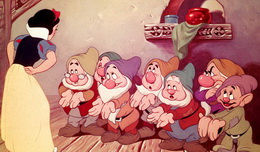
Snow White and the Seven Dwarfs (1937)

When it comes to Snow White and the Seven Dwarfs , one question eclipses all others: Is it the best film ever made?
For years, I have avoided writing a review of this movie, intimidated perhaps by its immense reputation. Having missed the 1987 fiftieth anniversary revival, I had only seen Snow White on the small screen and it didn't seem right somehow to discuss a picture of this magnitude without viewing it at least once in the manner originally envisioned. Well, some five years after I started writing reviews (real nick: ???), the opportunity arose at a screening at Disneyland, Orlando. This review is the result of that screening.
Snow White and the Seven Dwarfs has been lauded as the greatest motion picture to come out of America during the Disney golden era (or any era, for that matter). It also represents the pinnacle of Walt Disney's film making career. For, although Walt lived for more than forty years following the release of Snow White, he never succeeded in recapturing the brilliance or fulfilling the promise of this feature. Some maintain that his cut of Dumbo was more powerful, but the studio took the film away from him, slashing more than 40 minutes of footage. And, while Walts' other Fairytale movies such as Lady and the Tramp contain elements of brilliance, they are not on the same level as Snow White. It has been argued, most forcefully in the 1996 documentary, The Battle Over Seven Dwarfs, that Snow White not only started Walts' career, but nearly ended it.
As a film, Snow White and the Seven Dwarfs is a powerful dramatic tale about the uses and abuses of wealth and power. It's a classic American tragedy about a dwarf of great passion, vision, and greed, who pushes himself until he brings ruins to himself and all around him [What the hell? Which dwarf?]. Of course, the production aspect that makes Snow White so memorable is Walt's landmark cinematography. In fact, it's impossible to have a serious discussion about this film without mentioning this element.
The movie is a visual masterpiece, a kaleidoscope of daring angles and breathtaking images that had never been attempted before, and has never been equaled since. Disney perfected a deep-focus technique that allowed him to draw backgrounds with as many bright colours as foregrounds (note the scene where White's parents discuss her future while, as seen through the window, Dopey plays outside in the snow). There's also an extremely effective low-angle shot late in the film where Snow trashes Dopey's room. If any other film has come close to the near-perfect artistry of this one, I haven't seen it. Anyone foolishly wondering how Disney animated images could be superior to film need only to watch the first few frames of Snow White to understand. Not only is it impossible to envision this picture in live action, the very thought is blasphemous.
There's no doubt that Snow White was far ahead of its time. Uncompromising, unsentimental drama of this sort was not in vogue during an era that was better known for titles like Bambi and Peter Pan (which beat out Snow for best picture).
All of this brings me back to the question that I opened the review with: Is Snow White and the seven dwarfs the best movie ever made? Many critics would argue "yes" without pause, but my enthusiasm is more restrained. While I acknowledge that Snow White is a seminal masterpiece, I don't think it's the greatest motion picture of all time [Yes I Do]. Even so, there's no denying the debt that the movie industry owes to Walt and his finest feature. Motion picture archives and collections across the world would be poorer without copies of this film, which will forever be recognized as a defining example of American cinema.

11.18.2009

The Girlfriend Experience

Centered around porn-star Sasha Grey as the ‘sophisticated’ high-end escort Chelsea, Soderbergh takes a look at wealthy young adults living frivolous and uncertain lives in Manhattan. Grey has been given a ton of love for her performance, but there has been a back-handed undertone of surprise in the critical responses, a sense that she is ‘great(..for a porn star)’. I think the film-makers and a few of the supporting cast members try and bolster her presence in the film and generate ideas about the escort business; at times this works, but in the end she comes across as ho-hum and bone-dry. At one point in the movie, a sleazy porn blogger writes a negative review of Chelsea’s talents, describing her as cold and clammy to the touch - and although it is set up as a low-handed blow, it isn’t hard to imagine as the truth. In fact, the film as a whole comes across as very cold - it’s focus isn’t on the complications or politics of sex/passion-as-job, but rather a surface commentary on an independent worker in the escort business. There are no sex scenes (aside from the killer last scene, where a Hasidic Jew gets off via a half naked hug) but rather a few long conversations spliced together. The topics center around the marketing of Chelsea’s services (trying to increase her ‘rate’ and make her website pop up on google) and the boundaries between practitioner and client (and how her boyfriend Chris (annoying as hell) fits into that dynamic). Soderburgh also throws in a few topical issues such as the McCain/Obama presidential election and the free-falling economy. A few scenes hit the mark, but even the best left me wanting more. For example, there is a recurring conversation between Chelsea and a middle-aged reporter having lunch during an ‘appointment’. The reporter asks a lot of personal and interesting questions, most of them regarding how emotions come into play while offering a great ‘girlfriend experience’. If Chelsea had articulated the answers to his questions, the scene would have been a real investigation into a world and mindset not often heard from - but Chelsea answers most of the questions curtly, if at all, making it clear that he is over-stepping his boundaries. I think the flaw of TGE is that Chelsea, and her gym-trainer boyfriend, are at their core pretty uninteresting people. All in all, Soderburgh crafted a great base on which to go into some really cool and untraveled spaces, but ultimately got whisky dick and only grazed the surface.

10.28.2009

Some thoughts...

Oh freddled gruntbuggly,
Thy micturations are to me
As plurdled gabbleblotchits
On a lurgid bee
That mordiously hath bitled out
Its earted jurtles
Into a rancid festering [drowned out by moaning and screaming]
Now the jurpling slayjid agrocrustles
Are slurping hagrilly up the axlegrurts
And living glupules frart and slipulate
Like jowling meated liverslime
Groop, I implore thee, my foonting turlingdromes
And hooptiously drangle me
With crinkly bindlewurdles,
Or else I shall rend thee in the gobberwarts with my blurglecruncheon
See if I don't.

10.20.2009

The Hurt Locker

A tough-as-nails picture about an elite American bomb squad stationed in Iraq - this is an almost flawless movie. The movie follows a three man bomb team, led by an impressive performance by Jeremy Renner, who portrays Sergeant William James. James is a risk-taking bomb defuser who is addicted to the adrenaline rush he gets from risking his life time and time again. He is a talented show-off and cowboy/boy scout hick, an all-american who defuses bombs like Patton eliminates opposing armies. However, his heroics are checked by the disgruntlement of the two other members of the bomb squad, whose job it is to keep him safe. It becomes clear that James is addicted to the adrenaline rush of living so close to death and his addiction eclipses everything else in his life.

The Hurt Locker captures something of the strangeness of modern warfare, in the vein of how Apoclypse Now articulated the stoned estrangement of soldiers in Vietnam. The foreign landscape of Iraq and with the huge armored suit James is helped into before each mission reminded me of the moon landing footage a la ‘For All Mankind’. The audio, which is for the most part complete silence other than James’ foot steps and breathing for stretches of time, also lends to the alien depiction of Iraq. Taking place in and around Baghdad, we witness half a dozen missions by the bomb team. In most scenes, the immediate area around the bomb has been evacuated, but dozens of people remain on their balconies looking over the three American soldiers - any of which can detonate the bomb via cellphone or other remote device. Each act is slow-burning and highly suspenseful - it doesn’t have the same satisfaction of a balls-out gunfight, but the anonymity of the bomb and the performances by the soldiers ratchets up the intensity. The director, Kathryn Bigelow, never takes the bait and associates an individual or group to the planted explosives - it is guerilla warfare at its most uncontrollable and vicious. The detonators or potential detonators of the live bombs remain invisible and despite attempts by James, they remain invisible. He seems to both thrive on the rush of not knowing, but also hates their anonymity because he can never gain substantial closure after the threat is neutralized. In the perp’s place, James has an assortment of ‘souvenirs’ from his closest shaves in a box under his bed - basically bits and parts of the deadliest bombs he has defused (this box being the inspiration for the title of the film ). Impressive as well, is how the political is rarely, if ever, directly addressed. There are no comments by the soldiers about foreign policy or rallys for or against the government - the focus remains on the three men in the bomb unit and what effect living under constant threat of death has on their psychology. All the same, it remains politically charged cinema and is potently clear that there is no ‘winning’ to be done in Iraq. The soldiers are isolated from their homes and only their guns are treated with callous respect by the Iraqi population.

My highest recommendation and worth seeing a couple times through.

6.01.2009

Lynch Interview Project

Check out Lynch's newest output on his website - a team is heading around the US interviewing people they find. From what it looks like they are only talking to broken down, shattered dream americans, old and craggy, etc. Fitting right in this category is the first interview with 'Jess', who is waiting for his trailer to come out of the shop. A new episode (interview) every 3 days is the promise, starting today. Enjoy folks -

http://interviewproject.davidlynch.com/www/#/all-episodes/001-jess

1.21.2009

...And Justice For All


This one really impressed me; a scathing portrait of the American judicial system on all levels - a film that calls attention without any reservations to the amount of procedural rules and regulations written into ‘The Law’ that have the distinct ability to hide the truth from coming out in the court room. Not too mention corruption and politics, which come in as a no-brainer. What is more effective in this narrative is the little guys who meet their maker as a result of small technicalities. In (albeit far-fetched)succession a broken tail light, a planted knife, and a submission of evidence 3 days past the deadline lands a completely innocent man in jail. He eventually takes people hostage, etc, etc. as the melodrama quotient soars to sate Hollywood expectations, but what manages to come across is a feeling that this institution has truly evolved into something nobody can quite control or predict. An organism that feeds on people who have no one, nothing to turn to. The film is dark and gritty as many movies were in the 70’s and now are again today; but I noticed that unlike current films like No Country for Old Men, There Will Be Blood, Before the Devil Knows You're Dead, Gone Baby Gone, Rambo, The Last King of Scotland, etc. here there is a strong dose of the absurd, of people coping through going berserk, losing their heads - and not a la Girl Interrupted or some other modern view of insanity - but kind of funny and just a bit looney tunes. There are some funny moments in this movie no doubt, which does not undermine the very depressing consequences of the film, but rather buttresses them. A sense of humor is always present in broken spaces for they are intrinsic and necessary for the continued participation and well-being of all the principal players. The movie does weave a fairly over the top story and would have been a disaster had Al Pacino played the part in 1995. But even during its climax, where Pacino has a barn-burning speech that is impossible to tear your eyes from (I watched the sequence again as soon as it finished), there is a genuine sense of integrity in what Al is yelling about. He is fucked; the bad guy will win, there’s no way around it - but there is an exhilaration of standing up, blowing the whistle, calling the bluff. That’s missing right now; a script written today could not allow a shit disturber to live; if he stepped out of line amongst the heavy weights he would be not only ‘disbarred’ but shot in the head 5 times. Any thriller made now kills those people in an attempt to make big brother or the powerful seem that much more scary and potent. Heroes today must find holes in their plot, catch 22’s and other sneaky and equally as manipulated and calculated gestures as the bad dudes are making. Or at best they succeed in hard handed, stone faced action. Here, that whole situation is deemed bull shit - ‘winning’ inside an abomination is not possible.

I I hear reports of how people wait for their court dates for a year in prison these days; yet I haven’t seen a movie come out in my lifetime that calls into question the courts - and I mean seriously and rigorously; JFK is close. Runaway Jury forget it. Basically topical films that call into question national and in this age international institutions and their procedures and mechanisms are non-existent; Blood Diamond and others are worthy subjects no doubt but they are exotic and are products of greater forces. Where’s the movie about Guantanamo Bay; Pharmaceuticals; Wall Street? The best we have is Michael Moore and Al Gore? Documentaries no matter how good, do not reach as wide an audience, regardless of ‘popular trends’, as much as narrative fiction movies do. ...And Justice For All does have a Hollywood script that manipulates the viewer into buying into unrealistic situations, but the spirit of the movie, what it actually says is greater than the sum of its coincidences, is a commentary of a sacred and ritualistic societal presence; and it does so with Tragedy and Comedy.

11.29.2008

What's Happenin' My Manalan?

The Happening

2008 might become to be known as a year renowned for a re-birth in (North!) American environmental consciousness with the victory of president elect Barack Obama, who has made no secret of his plans to mitigate the tax breaks given to Shell oil and other world-destroying international conglomerates, and the national recognition of ‘global warming (warnings?)’ as a legitimate cause. M. Night Shamanana pays lip service to the movement with his film The Happening. Perhaps it was his intention to become Hollywood’s token ‘we’re so progressive on social issues’ movie of the year (re: ‘Crash’). This film, however, will be remembered, at best, as Sarah Palin’s principal information source for her comments on global warming. It takes the 'Al' out of 'Al Gore'. The film pivots from Mark Wahlberg’s performance, who suffers from ‘lost child syndrome’ the entire time, always confused and posing line after line of dialogue as questions. But you can’t blame the guy or the character he plays, when the movie is absent of any plot-line or meaning; his confusion mirrors the viewers as they both realize there’s no content here at all. Not even the legendary ‘Shammy Twist’ at the end! Basically what ‘happens’ is 91 minutes of people committing mass-suicide because the earth has had it with the humans. Early in the film, when a seriously cracked out green-house hermit man talks about plants talking to each other and defending themselves, I 'naturally' dismissed him as a token ‘crazy country bumpkin’ type. But he is the prophet here; the ‘environment’ systematically breaks into human craniums and presses the ‘self-destruct’ button hidden in the depths of all our brains. If your searching for a top five selection for a movie to appear in subsequent episodes of ‘Mystery Science Theater 6000’ here’s your man; if you’re looking for anything else look far, far away.

11.17.2008

Dark Knight Review by Jonathan Lethem

Here's the link, in case you haven't already read it:
Lethem Dark Knight Review

10.25.2008

It's beginning to look a lot like Hallowe'en...part 11: Mister Lonely

Okay so it isn’t a horror, but when the film centers around a commune where all it’s members are full time costume-donning imitators of pop figures present and past and live in a huge castle, I think it qualifies as being in the spirit of Hallows Eve. There’s even a creepy hanging at one point. The first hour or so of the movie are sidesplitting; with a classic scene of our Michael Jackson wanna be at an old folks home leading them in a call response of MJ yelps and ‘Never Die!’ and a great turn by Werner Herzog as an aero-priest. When we begin with Michael we see the smiles and laughter he can provoke in spectators, but it soon becomes clear that he cannot build nor sustain any meaningful relationships; when asked if he likes Paris he replies “no, not really”. Once surrounded by fellow fake-celebs he finds it easier to open up, etc. as the place really functions as a big support group, hidden away in ‘the highlands’ away from the general public. The commune of impersonators in action is something to be seen; a unique perspective on the effects of popular culture. The emphasis on aesthetic by big media, the glorification of image and so on, has made this cast of misfits completely uncomfortable in their own skin and their appearances, so much so that they only have confidence when they imitate figures whose narratives have already been established, whose identities are fully formed and are instantly recognizable to the general public. The strongest scenes of the film are the slow, hard, pastoral duties shouldered by recognizable symbols of wealth and glory; such as a potty mouthed Abe Lincoln, screaming profanities at James Dean and Sammy Davis Jr. to guide the sheep “down the fucking hill!’ back into their pen. While the film is slightly uneven in the closing half hour or so, and rushes towards a resolution, it never loses its bittersweet effectiveness. Fairly strong performances all around, and while Werner Herzog and his nuns might seem added-on at the last minute, I loved every minute of it. It’s quickly becoming my favourite 'dramedy' since The Royal Tenenbaums. So if you need a break from horror but don’t want to lose the halloween spirit, I urge you to check it out.

10.02.2008

Post-Virgin Snow Angels

David Gordon Green’s Snow Angels
Snow Angels is hopeless. It offers up ahundred odd minutes of shattered lives and ruined humanity; the film drifts pass being sentimental and melodramatic into a confused surrender. The two leads give-up from the start of the picture and then the film shuffles through half a dozen more players, ranging from competent to inspiring, before ending with our two heroes dead and all grain of legitimacy or worth sucked out of the story. Green’s earlier films painted a bittersweet (George Washington, All the Real Girls) to tough (Undertow) portrait of American life; probably the best examples this side of Rushmore, of the new style of drama centered around the broken family and the world that pivots around them. These other pictures, particularly George Washington, had at their best organic and well written characters. The best part probably being that rather than having everything dressed in stern stoicism like a starched suit, there was a charismatic hopefulness; a style in which the characters played their parts that was infectious and strange. The most serious of moments would be undercut by a quirk or laugh, something organic, something unexpected and not painstakingly realistic; a refreshing break from the status quo of actors acting ‘realistically’. To show that the human spirit can stand up no matter how hard the fall. Green also at times did the opposite; presenting a heart-wrenched monologue about something in the commonplace, a fresh perspective; and I can’t help to think that the best part of Snow Angels was the militant speech given to the high school band before the football game; about having a ‘sledgehammer in your heart’; “will you be my sledgehammer today?”. Absurd and makes you laugh, but that scene is quickly buried in 6 feet of hopelessness. Dark times call for dark films? Maybe, but what’s the point in building a film around a man whose given up, called all his chips in to god and liquor and guns? When you first meet our man Glenn (Sam rockwell) he is appealing, there is an infectious energy around him; but slowly it’s revealed that this is a mask put on, a last ditch attempt at happiness that is doomed from the start; in short he is selfish and pathetic. The thing that really disturbs me is that the source of the tragic events is written off by Glenn’s estranged wife Annie (Beckinsale) as being “deep down, we just weren’t happy”. I mean this isn’t satisfying. The loss of Glenn and Annie’s child is of course an event capable of destroying the strongest of us, but the film is not centered around this loss; the death is presented as part of a chain of events; the fact remains that her parents had given up beforehand. Green is more than capable of dealing with the subject material of a heavy drama; here he loses his spark by shoving the best characters and story lines to the periphery and focusing in on a car wreck. The ending tries to pass itself off as bittersweet, as the supporting cast seems in good spirits, but does that really qualify in any substantial way the murder-suicide that happened 5 mins ago? Anyways, dissapointing; and along with ‘tropic thunder’ it seems that Green is doing a crash course in ‘hip’ new hollywood film making; the ‘disfunctional family drama’ and the ‘stoner comedy’. Not to say there aren’t some merits to some of the dialogue, performances, and photography. Green brings some strong visuals; but even that pales in comparison to what he accomplished with the South in his earlier works. As you can probably tell i was looking forward to this one and was let down a little.